
Fourth Quarter Growth: How Trinidad Chambliss Flipped the Script Against Georgia
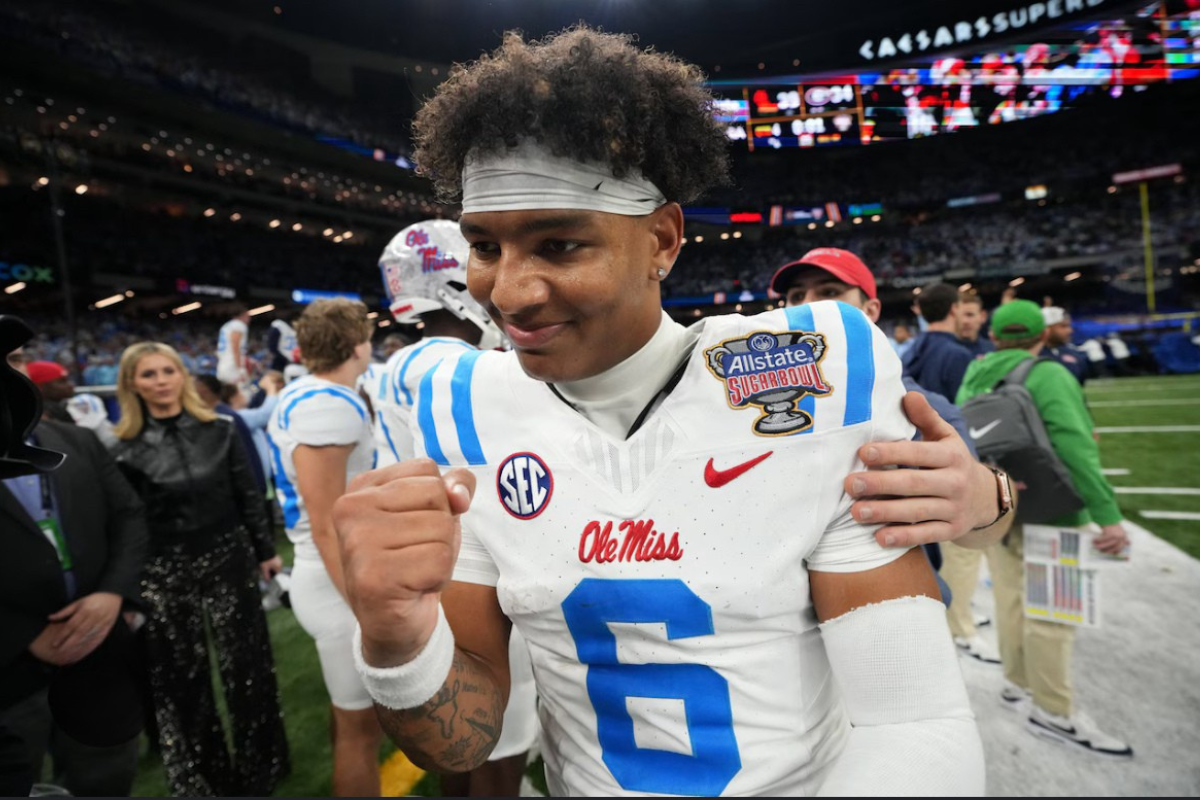
Trinidad Chambliss celebrates after beating the Georgia Bulldogs in the Sugar Bowl advancing to the semi finals of the college football playoffs. Photo by Mathew Hinton of AP
If you’re looking for the biggest difference between Ole Miss’ October loss at Georgia and its College Football Playoff win over the Bulldogs in the Sugar Bowl, the answer is simple: quarterback play in the fourth quarter.
Back in October, Ole Miss walked into Athens and looked like the better team for most of the night. The Rebels were ahead 35–26 late in the third quarter, firmly in control on the road, and seemingly on their way to a signature regular season win over the Georgia Bulldogs.
Then the fourth quarter happened.
Georgia’s defense turned up the pressure, the Bulldogs’ crowd came alive, and Ole Miss quarterback Trinidad Chambliss struggled to keep the offense afloat. Chambliss went 1-for-10 for just one yard in the fourth quarter, as Georgia completely shut Ole Miss out over the final 15 minutes. On the other side, Georgia’s offense, led by Gunner Stockton scored 17 unanswered points, flipping the game into a 43–35 Bulldogs victory.
It was a collapse, not because Ole Miss lacked talent, but because it couldn’t answer when Georgia applied maximum pressure.
Fast forward to the College Football Playoff in the Sugar Bowl, and the script couldn’t have been more different.
This time, Ole Miss found itself in another tight battle with Georgia, but when the game reached the fourth quarter, Chambliss didn’t blink. Instead of pressing, forcing throws, or shrinking under pressure, he delivered the most efficient stretch of football of his season.
In the fourth quarter alone, Chambliss was a perfect 12-for-12 for 118 yards and a touchdown. No turnovers. No wasted plays. Just calm, controlled execution. Every throw mattered, and every drive drained the clock while keeping Georgia’s defense on its heels.
By the final whistle, Chambliss had posted 30 completions on 46 attempts for 362 yards and two touchdowns, adding 14 rushing yards on four carries. More importantly, he finished the game stronger than he started and that is something that didn’t happen in October.
That growth was the difference.
Where Georgia once dictated terms late, Ole Miss now did. Where the Rebels once stalled, they sustained drives. Where Georgia once surged, it was the Bulldogs who ran out of answers.
Football seasons are often defined by moments of growth, and for Ole Miss, the evolution of Trinidad Chambliss in the fourth quarter was the defining factor. In October, Georgia won because Ole Miss couldn’t close. In the College Football Playoff, Ole Miss won because its quarterback did.
Same teams. Same stage. Completely different ending and it all came down to how the fourth quarter was played.