
Kalen DeBoer Has a Major Decision at Quarterback
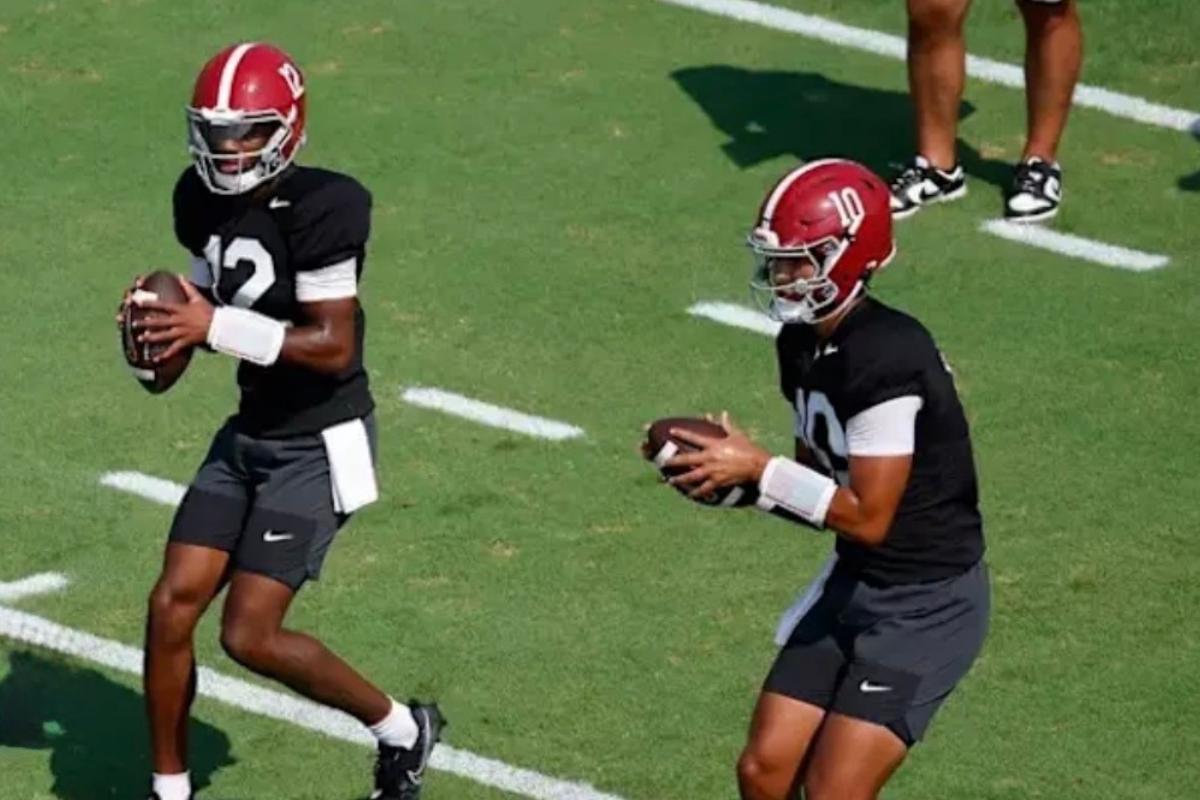
Keelon Russell and Austin Mack during QB Drills. Photo By UA Athletics
Alabama’s A-Day spring game was supposed to bring clarity. Instead, it raised more questions than answers. Freshman Keelon Russell accounted for four total touchdowns and looked like the most dynamic quarterback on the field. Meanwhile, Austin Mack operated with the first-team offense and showed steady command. What was expected to separate the Alabama quarterback battle in 2026 may have actually tightened it.
Russell’s performance was the headline. He played with confidence, pushed the ball down the field, and showed an ability to extend plays when protection broke down. For a young quarterback, that level of composure in a high profile setting matters. It is not just about the touchdowns. It is about how they came. Russell looked comfortable making reads and did not hesitate when opportunities presented themselves. That is what you want to see from a player trying to force his way into the conversation.
At the same time, Mack’s presence with the first team offense cannot be ignored. That tells you where the coaching staff stands right now. Mack understands the system. He gets the ball out on time. He operates the offense the way Kalen DeBoer wants it run. There is value in that, especially in an offense built on rhythm and timing. While Russell may have had the flashier day, Mack still looks like the safer option entering the summer.
This is where the debate begins. Is this a good problem to have, or is it the start of something that could get messy?
On one hand, having multiple capable quarterbacks is exactly what elite programs want. Competition raises the level of play across the room. It forces players to stay sharp. It gives the coaching staff flexibility if one option struggles. In today’s college football landscape, depth at quarterback is not a luxury. It is a necessity. From that perspective, Alabama is in a strong position. Russell’s emergence gives the offense a different dimension, while Mack provides stability.
On the other hand, quarterback uncertainty can quickly become a problem if it lingers too long. DeBoer is entering a critical year where expectations are not going to be lowered. Alabama is not a program that tolerates inconsistency at the most important position on the field. If this battle extends into the season, it could impact timing, leadership, and overall offensive identity. Quarterbacks need reps with the first team to build chemistry. Splitting those reps deep into fall camp can slow that process down.
The concern becomes even more real when you look at the run game. Alabama finished near the bottom of the SEC in rushing production last season. That is not the standard in Tuscaloosa. The spring game did not fully erase those concerns. There were flashes, but there was not enough consistency to suggest a complete turnaround. If the run game remains unreliable, the pressure on the quarterback position increases even more.
That creates a situation where DeBoer may not have the luxury of easing into a decision. He needs a quarterback who can not only manage the offense but also elevate it. Russell’s playmaking ability could help mask some of those issues. Mack’s experience could help stabilize them. The question is which approach gives Alabama the best chance to win right away.
In the end, this quarterback battle will define Alabama’s 2026 season. It can be a strength if handled correctly. It can also become a distraction if it drags on. For now, Russell gave fans a reason to be excited, and Mack gave the staff a reason to stay patient.
That is the balance DeBoer has to strike. And how he handles it may determine whether Alabama is competing for championships or trying to figure itself out on the fly.
Alabama’s A-Day spring game was supposed to bring clarity. Instead, it raised more questions than answers. Freshman Keelon Russell accounted for four total touchdowns and looked like the most dynamic quarterback on the field. Meanwhile, Austin Mack operated with the first-team offense and showed steady command. What was expected to separate the Alabama quarterback battle in 2026 may have actually tightened it.
Russell’s performance was the headline. He played with confidence, pushed the ball down the field, and showed an ability to extend plays when protection broke down. For a young quarterback, that level of composure in a high profile setting matters. It is not just about the touchdowns. It is about how they came. Russell looked comfortable making reads and did not hesitate when opportunities presented themselves. That is what you want to see from a player trying to force his way into the conversation.
At the same time, Mack’s presence with the first team offense cannot be ignored. That tells you where the coaching staff stands right now. Mack understands the system. He gets the ball out on time. He operates the offense the way Kalen DeBoer wants it run. There is value in that, especially in an offense built on rhythm and timing. While Russell may have had the flashier day, Mack still looks like the safer option entering the summer.
This is where the debate begins. Is this a good problem to have, or is it the start of something that could get messy?
On one hand, having multiple capable quarterbacks is exactly what elite programs want. Competition raises the level of play across the room. It forces players to stay sharp. It gives the coaching staff flexibility if one option struggles. In today’s college football landscape, depth at quarterback is not a luxury. It is a necessity. From that perspective, Alabama is in a strong position. Russell’s emergence gives the offense a different dimension, while Mack provides stability.
On the other hand, quarterback uncertainty can quickly become a problem if it lingers too long. DeBoer is entering a critical year where expectations are not going to be lowered. Alabama is not a program that tolerates inconsistency at the most important position on the field. If this battle extends into the season, it could impact timing, leadership, and overall offensive identity. Quarterbacks need reps with the first team to build chemistry. Splitting those reps deep into fall camp can slow that process down.
The concern becomes even more real when you look at the run game. Alabama finished near the bottom of the SEC in rushing production last season. That is not the standard in Tuscaloosa. The spring game did not fully erase those concerns. There were flashes, but there was not enough consistency to suggest a complete turnaround. If the run game remains unreliable, the pressure on the quarterback position increases even more.
That creates a situation where DeBoer may not have the luxury of easing into a decision. He needs a quarterback who can not only manage the offense but also elevate it. Russell’s playmaking ability could help mask some of those issues. Mack’s experience could help stabilize them. The question is which approach gives Alabama the best chance to win right away.
In the end, this quarterback battle will define Alabama’s 2026 season. It can be a strength if handled correctly. It can also become a distraction if it drags on. For now, Russell gave fans a reason to be excited, and Mack gave the staff a reason to stay patient.
That is the balance DeBoer has to strike. And how he handles it may determine whether Alabama is competing for championships or trying to figure itself out on the fly.